

Principles of Dependable Intelligence
Dependable intelligence is not the result of capability alone, but the outcome of clear principles that shape how systems are designed, evaluated, and aligned.

As intelligent systems become more embedded in the infrastructure of modern society, the need for stability, alignment, and predictable behavior becomes essential. Dependability is not optional; it is foundational. Glemad’s work is grounded in a set of principles that define how we conceptualize, build, and evaluate intelligence that must operate reliably in complex and consequential settings.
These principles shape our research direction and act as guardrails for the systems we create.
Stability Under Uncertainty
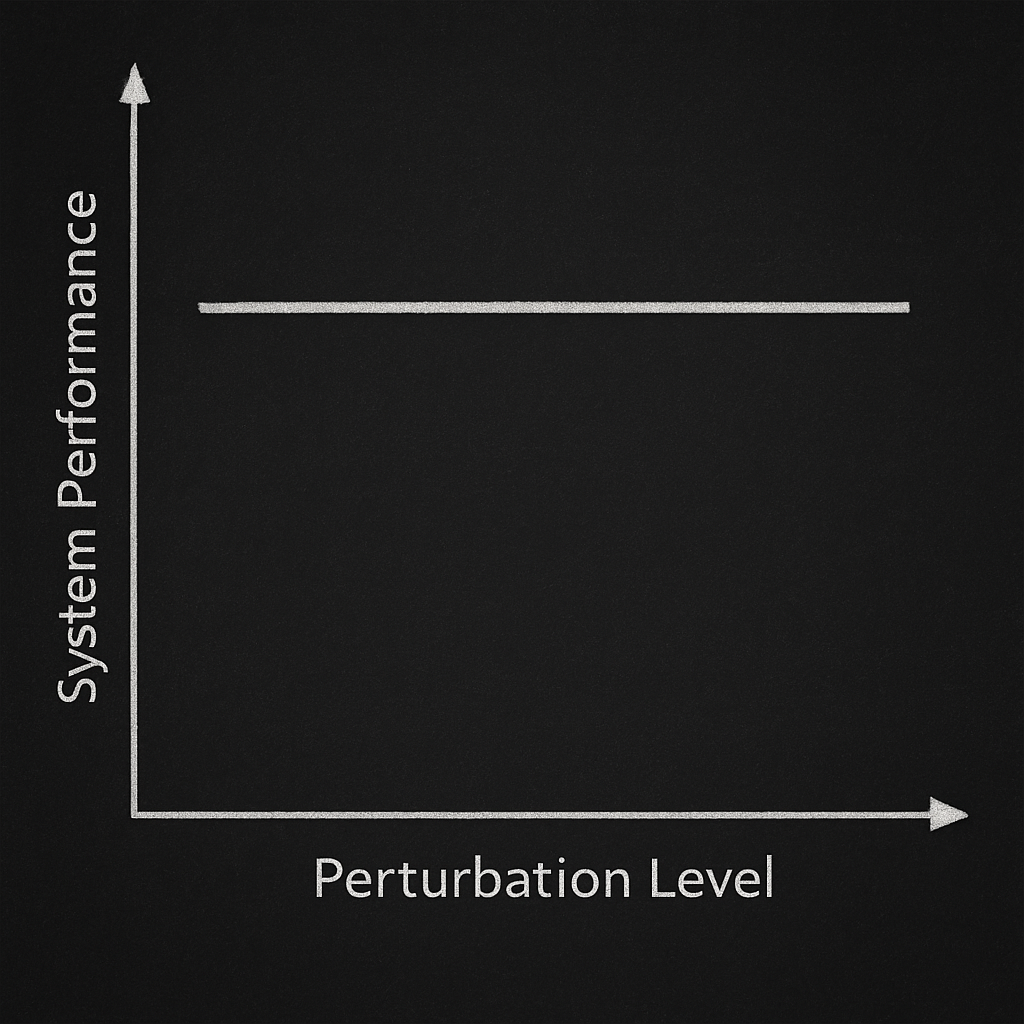
Intelligence must behave predictably even when conditions shift or when information is incomplete. Systems that collapse under stress or behave erratically in edge cases cannot be relied upon for critical decision-making.
We evaluate stability through controlled stress environments that expose intelligence to ambiguity, noise, adversarial conditions, and conflicting signals.
Transparent Reasoning
Opaque systems create risk. Dependable intelligence requires reasoning processes that can be examined, understood, and audited. We emphasize interpretability at every level not only what the system outputs, but how it arrived there.
Transparent reasoning replaces guesswork with clarity.
Alignment as a Structural Property
Alignment is not a feature or an afterthought. It must be embedded into the architecture, the training philosophy, and the evaluation methods. The system’s incentives, constraints, and objectives must be coherent with human intentions.
We evaluate alignment across three axes:
- behavioral alignment
- contextual alignment
- boundary adherence
Coherence Across Contexts
Intelligence should exhibit consistent principles regardless of the domain. Coherence reflects the ability to reason in a stable manner across shifting environments, questions, or information types.
A dependable system does not drift in unexpected directions as context changes; its grounding remains solid.
Reliability at Scale
Systems that perform well in controlled settings but degrade in real-world conditions cannot be trusted. Dependable intelligence must maintain performance when exposed to:
- scale
- distribution shifts
- operational complexity
- unstructured inputs
Evaluating for reliability requires observing behavior over long horizons and across varied environments.
Predictable Boundaries
Intelligence must operate within clearly defined limits. Boundaries prevent systems from taking actions or making inferences outside their legitimate scope. A system with unpredictable boundaries cannot be trusted, regardless of its capability.
Boundary design involves constraining models through architecture, reasoning frameworks, evaluation, and alignment objectives not through reactive patches.
These principles form the backbone of how Glemad approaches intelligence. They serve as evaluation criteria, design constraints, and philosophical commitments. As our systems evolve, these principles will remain the standard by which we judge their readiness for real-world use.