

Glemad Academy
Working responsibly with AI in critical systems
Glemad Academy brings what we learn in research to the engineers, operators, policymakers and institutions responsible for real systems.
Education based on Glemad research
We teach the principles behind these systems, the conditions under which they fail, and the responsibilities that come with using them. The aim is lasting capability rather than familiarity with a product.
What we teach
Systems and infrastructure
Continuous infrastructure intelligence, telemetry design, policy-bounded control, and systems that operate under real constraints.
Responsible AI engineering
Guardrail design, safety instrumentation, transparency reporting and impact assessment for critical environments.
Governance and operations
Compliance workflows, audit evidence, operational readiness, and decision-making under institutional oversight.
Ollandi in practice
Working with Ollandi while preserving authority, traceability and defensible limits on action.
How learning is assessed
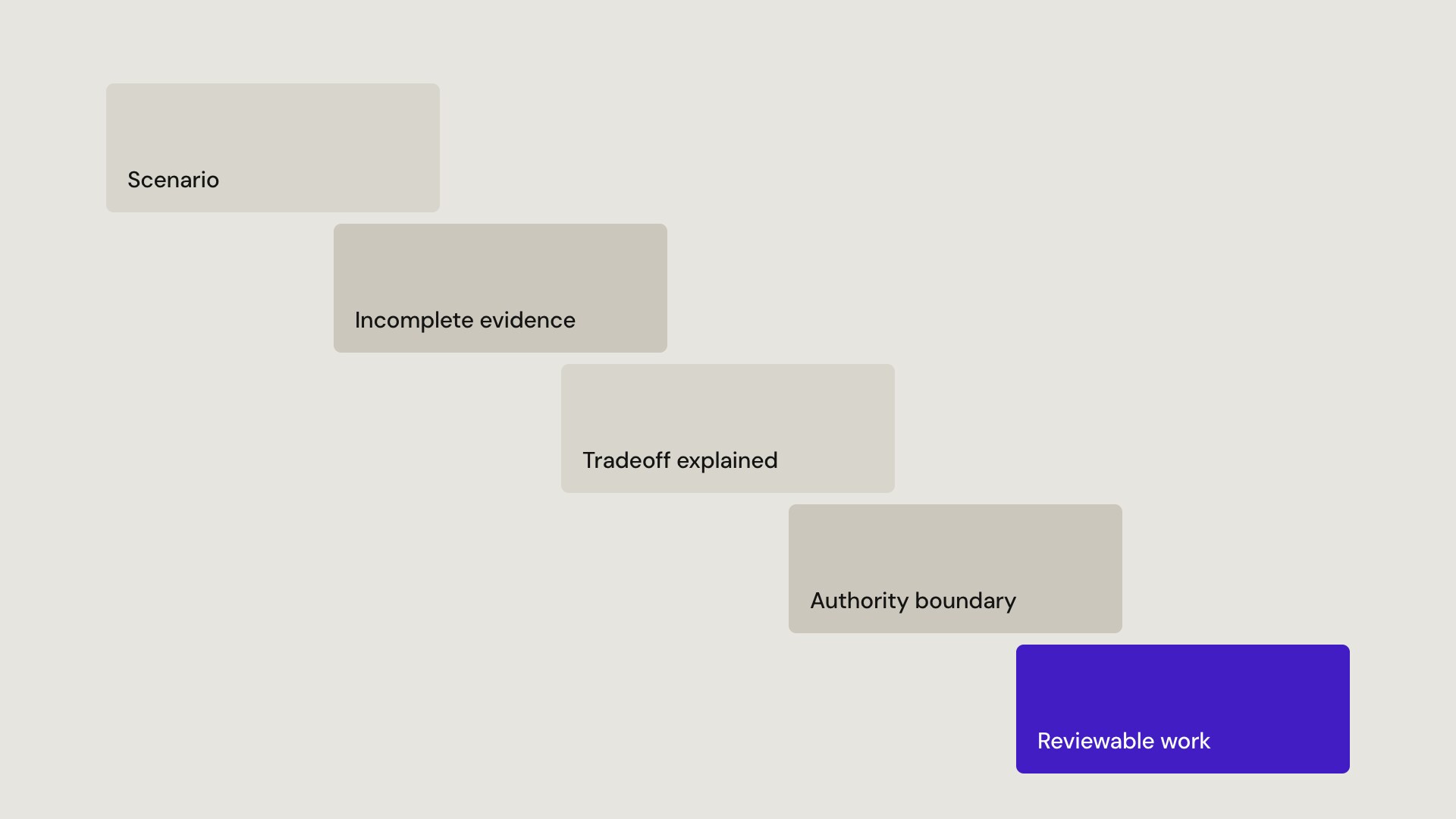
Learners work through scenarios, interpret incomplete evidence, explain tradeoffs, defend an authority boundary, and produce work another person can examine. The standard is whether their judgment stays coherent when the situation changes.
Ways to learn
Live cohorts
Instructor-led study, peer projects, office hours, and drills grounded in realistic operational conditions.
Self-paced studios
Structured labs and simulated environments for safe experimentation, repeated practice and independent study.
Immersion weeks
Intensive programs for regulators, security leaders, public institutions, and teams preparing for consequential decisions.
Partner academies
Learning paths developed with universities, research communities, public institutions and professional bodies.
Who we train
Programs serve independent practitioners, technical teams, leadership groups, universities, regulators and public institutions. Each setting changes the learning context, never the standard of evidence.