

Research
Engineering at Glemad
Engineering carries research into real infrastructure without losing its evidence, its limits or its ability to fail safely.
Systems that stay coherent as environments change
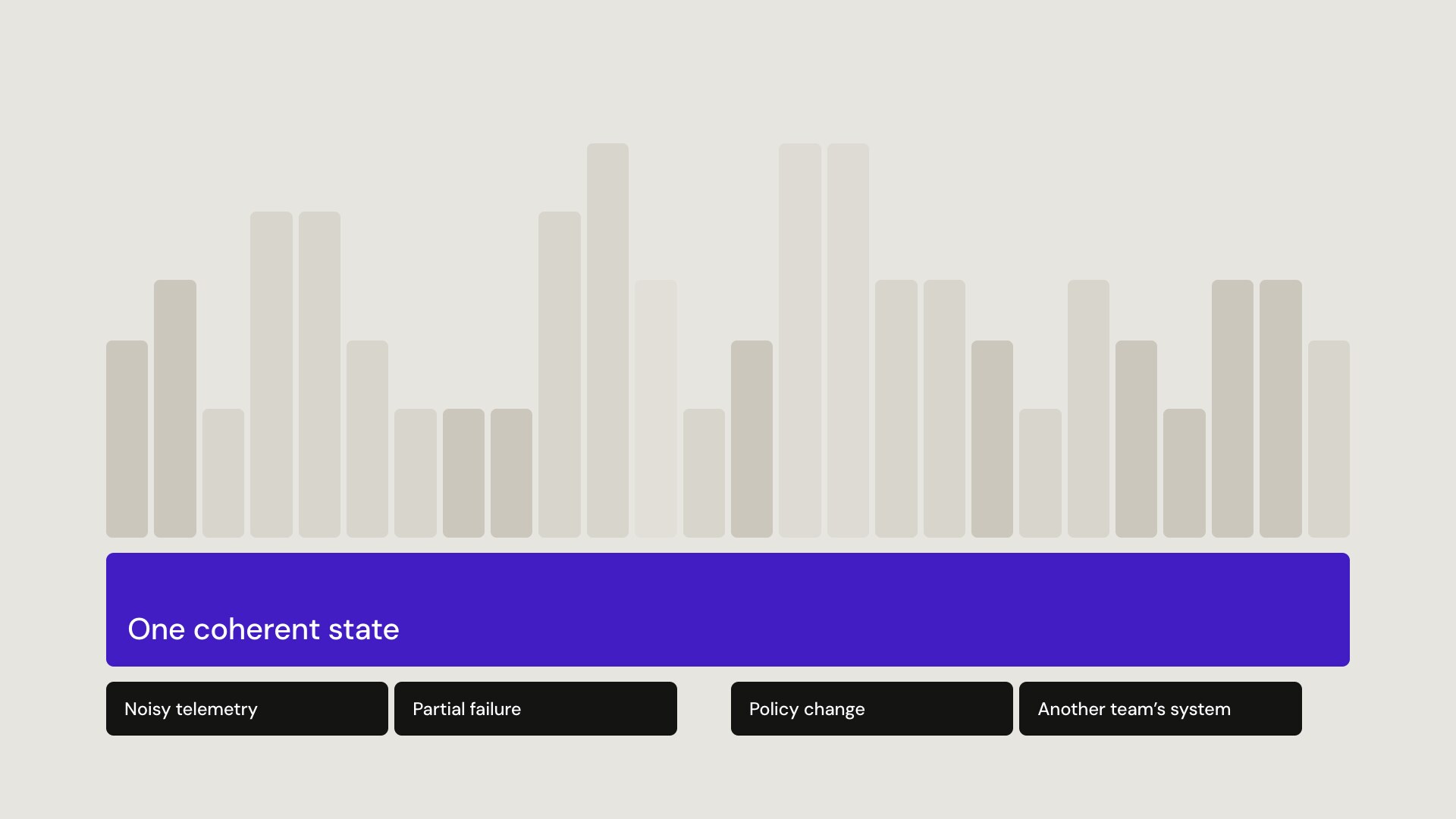
AI that defends infrastructure has to stay coherent through noisy telemetry, partial failures, long-running state, changing policy and systems owned by different teams. Our engineering keeps the quality of its judgment intact as it moves from evaluation into environments that keep changing.
Core practices
State before inference
Systems should know what changed, when it changed, where the evidence came from, and what remains unresolved.
Constraints in architecture
Authority, permissions, reversibility and failure behavior belong in the design, not in operational memory.
Evaluation in the loop
Long-running systems need reproducible scenarios, decision records, boundary tests, and continuous comparison against real outcomes.
Evidence by construction
The record of a decision should be produced with the decision rather than reconstructed after context has disappeared.
Engineering notes
Architecture becomes more useful when its tradeoffs are visible. Engineering notes document evaluation harnesses, decision logs, telemetry systems, context design, failure analysis, and the methods used to make behavior inspectable.